The confrontation with Russia and the upheavals in the Middle East now reach directly into Europe's networks, data and supply routes. European states are responding in two complementary ways: by rewriting the rules that govern their defence industry, and by taking the question of collective security to forums broader than the Union. The coercion they face comes through indirect channels, and their response relies on law as much as on diplomacy.
The timing explains why the issue is pressing. The legislation opening up the European defence market has just been adopted and published. A destabilisation campaign struck on the eve of the Dublin meeting on the continent's security and stability. For business leaders, the question is no longer whether security risks weigh on their operations. It is which legal instruments and partnerships governments intend to use to contain those risks, and at what cost.
Pressure that bypasses borders rather than crossing them
The incidents reported this month share one feature: none is a conventional military clash, and all target infrastructure or symbols of the state. Poland attributes to Russian intelligence services an arson attack carried out in September on a Starlink satellite station. Prime Minister Donald Tusk called the case hybrid warfare, and it led to the arrest of two Turkish nationals in Germany. The operation itself shows how cross-border this threat is: a target in Poland, perpetrators of another nationality and an arrest in a third country. In Italy, Prime Minister Giorgia Meloni attributed to pro-Russian hackers the release on the dark web of personal data belonging to Foreign Minister Antonio Tajani. The attacks are no longer aimed only at systems; they now target the officials who conduct foreign policy.
The most telling campaign came ahead of the European Political Community (EPC) summit: a coordinated wave of hoax bomb threats targeted Irish media outlets, supermarkets and dozens of commercial flights across Europe. Its effectiveness lies in its low cost. Without destroying anything, it disrupts air transport, the media and retail, and sows doubt in the run-up to a meeting of heads of state and government.
On top of this deliberate pressure comes an external shock from a confrontation to which Europeans are not party. According to European Commission President Ursula von der Leyen, the closure of the Strait of Hormuz following a US strike on the Iranian island of Qeshm has cost the European economy €127 billion (Rapporteur (ex-Euractiv), 03/11). The figure is a reminder that Europe bears the cost of a decision taken in Washington against Tehran, simply through the disruption of a single shipping route. Hybrid coercion in the East and logistical dependence in the South point to the same vulnerability: open economies whose security depends on flows they do not control.
The response is regulatory, and the rules remain subject to judicial review
The most concrete response this month has been legislative. On 21 October 2026, the European Parliament and the Council of the European Union adopted a package of legislation that changes the conditions under which the defence industry produces, invests and sells. Regulation (EU) 2026/2387 establishes the Agile and Rapid Defence Innovation Programme (AGILE), with a budget of €115 million for the 2027 financial year. The amount is modest; what marks a shift is the underlying logic of speed in innovation.
The most far-reaching change probably lies in Regulation (EU) 2026/2382, which amends several acts, including Regulations (EC) No 1907/2006 and (EU) No 528/2012, as regards defence readiness, in order to adapt regulatory and financial requirements and facilitate investment in the defence sector. Existing rules are being adjusted in the name of the defence technological and industrial base, which means the hierarchy of regulatory priorities is shifting. Directive (EU) 2026/2383 completes the package by simplifying intra-EU transfers of defence-related products and relaxing public procurement rules in the fields of security and defence. Market fragmentation between Member States is now treated as a strategic weakness, and no longer merely as a competition issue.
Law is also a weapon in relations with Moscow, though a constrained one. The General Court of the European Union annulled the withdrawal of EU recognition from the Russian Maritime Register of Shipping while upholding the other sanctions. The ruling is a reminder that restrictive measures against Russian entities must withstand judicial scrutiny. The legal arsenal deployed against Russian pressure will only last if it survives litigation. This requires the authorities to state their reasons rigorously, since the robustness of each measure depends on it.
The action is shifting to forums broader than the Union
The threats described above disregard the Union's borders. Ireland, Poland and Italy are the targets, but the disrupted flights cross the entire continent, and the Hormuz shock hits every importing economy. It therefore makes sense for the political response to play out in formats that extend beyond the EU. In Dublin, the EPC brings together some fifty European leaders for a strategic dialogue on the continent's security and stability, in the very country targeted by the hoax campaign. The second EU-UK summit will take stock of the strategic partnership, notably on defence, energy, mobility and border control. These strands overlap with the vulnerabilities exposed this month: physical security, supply and the control of flows.
For businesses, the implications operate at two levels. Defence manufacturers and their subcontractors now have a more flexible framework, with adapted regulatory and financial requirements, easier transfers and lighter procurement rules. They will need to assess the actual scope of each instrument, as these adjustments apply specifically to the sector. Companies that depend on shipping routes and critical raw materials, by contrast, are exposed to shocks that neither EU regulation nor the EU budget can neutralise on their own. Their fate depends partly on what these broader cooperation forums deliver. Finally, because the AGILE budget is earmarked for 2027, the annual budget negotiations will determine whether these commitments translate into practice.
In brief
- The summary of the decision fining Alphabet €430 million for breaching its anti-steering obligations under the Digital Markets Act has been published in the Official Journal.
- In Commission v Hungary (C-660/24) and Commission v Czech Republic (C-681/24), the CJEU held that questioning suspects without a lawyer when the lawyer fails to arrive within a set time limit is contrary to EU law (Cour de justice de l'UE, 22/10).
- The CJEU upheld the lawfulness of lower national caps on electricity revenues under emergency Regulation (EU) 2022/1854.
- The European Commission has made imports of polyether polyols originating in China subject to registration, paving the way for possible anti-dumping duties.
What to watch
- 10/11/2026: budget Conciliation Committee between the Council and the European Parliament on the EU's 2027 annual budget, the financial year on which the AGILE budget depends.
- 11/11/2026: expected presentation by the European Commission of the Circular Economy Act, aimed at reducing the Union's dependence on critical resources.
- 12/11/2026: 9th meeting of the European Political Community in Dublin, with a strategic dialogue on the continent's security and stability.
- 20/11/2026: second EU-UK summit in Brussels, taking stock of the strategic partnership (defence, energy, trade, mobility, border control) and issuing a joint declaration.
Key takeaways
- Adopted on 21 October 2026, three EU acts relax the rules governing the defence industry: easier investment, simpler intra-EU transfers and lighter public procurement.
- Hybrid coercion attributed to Moscow targets European infrastructure and officials, while the closure of Hormuz has cost the European economy €127 billion.
- The AGILE budget hinges on the 10 November budget conciliation, and the response to logistical shocks depends partly on the Dublin and EU-UK summits.
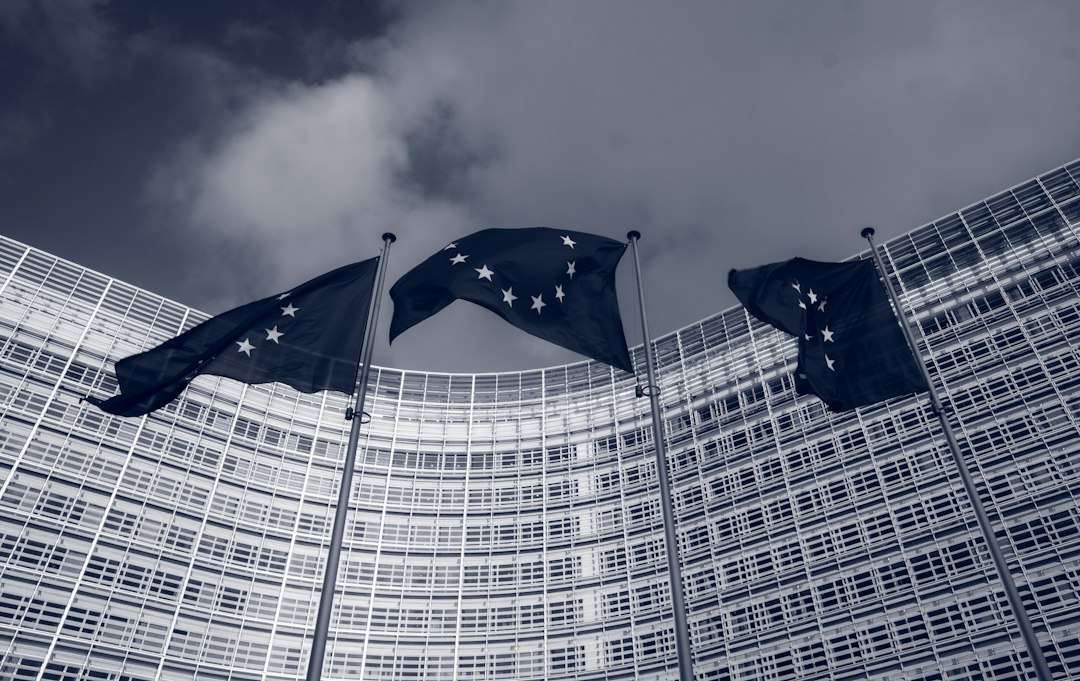
Photo: Christian Lue / Unsplash
Get the European Policy briefing by email
Monthly intelligence on european policy, reviewed by senior analysts. Available in English, French and Italian.
Subscribe for free