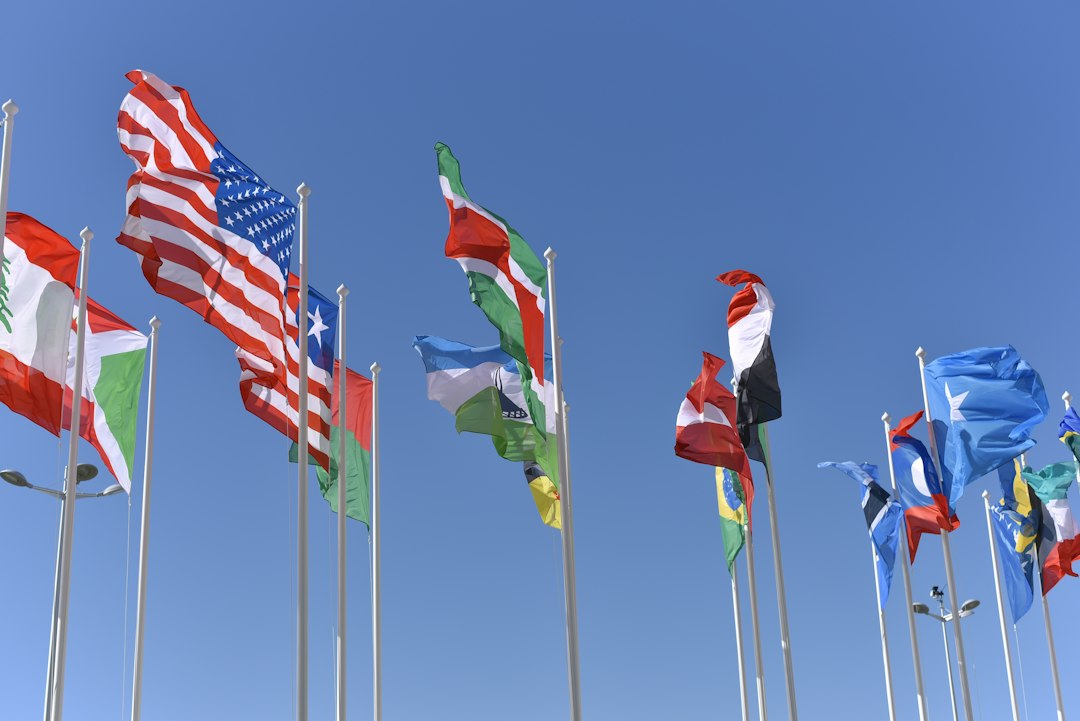
The major international forums no longer serve primarily to set common rules. They have become the very object of confrontation between states. Deciding who has the right to judge, who is invited to the table and who controls the use of international public money now carries more weight than the substance of the texts under negotiation. This shift runs through international criminal justice, the G20 and the Bretton Woods institutions this month, and it is reshaping the value of each forum both for those who sit in it and for those who depend on it.
The timing matters because the multilateral calendar tightens through year-end, from the climate conference in Antalya to the G20 summit in Florida, by way of Shenzhen. Each of these gatherings will be read first through its guest list and the conduct of its rituals, well before its conclusions. For senior decision-makers, the challenge is no longer simply to track what is decided there, but to anticipate who will still be able to decide anything there at all.
Controlling Access Is Replacing Rule-Making
The clearest case is the International Criminal Court. The US administration has imposed direct financial sanctions on the court in The Hague, in an offensive aimed at "dismantling" it that bars any US company or entity from transacting with it. Washington is not challenging a specific ruling by the Court. It is attacking the Court's material capacity to function. The Court, which has 125 members, a group that does not include the United States, Russia, China, India or Israel, has denounced the move as an attempt to obstruct justice and to intimidate. The list of absentees is a reminder that the institution has always been built without several major powers. What is new is that one of them is now using its financial weight to strike at a court to which it does not belong.
The same logic governs the US presidency of the G20. The foreign ministers' meeting in Atlanta, chaired by Marco Rubio, hosted Sergei Lavrov in person, while South Africa has not been invited to the summit and the final agenda centres on growth, deregulation, energy and economic security (Agenda institutionnel). The host country is thus shaping the table as much as it is setting the agenda: it brings one actor back in and shuts out another that is a member of the forum. The summit's composition has itself become a political message, one that other participants must accept, work around or contest.
Largely Symbolic Responses, Competing Strategies for a Seat at the Table
Faced with these decisions, Washington's allies have opted for public disapproval rather than a rupture. The foreign ministers of eight allied countries issued a joint statement expressing their disagreement with the US decision on the Court. In Atlanta, foreign ministers skipped the family photo because of Sergei Lavrov's presence, and Kaja Kallas, the European Union's High Representative, warned that a visit by Vladimir Putin to the Miami summit would risk normalising Russian war crimes. These gestures operate at the level of ritual and rhetoric: they signal disagreement without altering the composition of the forums or the reach of the sanctions.
Russia, by contrast, is exploiting the openness of these forums to regain its standing. Following its foreign minister's attendance in Atlanta, its president floated a meeting with Donald Trump in China at the upcoming APEC summit. For Moscow, each forum becomes a step towards normalisation, and the choice of a third country as a possible venue shows that a summit's value also lies in the side meetings it makes possible.
Other forums are claiming a role in shaping the very form of the multilateral order. In New Delhi, the summit that closed India's BRICS presidency adopted a 45-page Delhi Declaration emphasising support for the Global South and reform of multilateral institutions. In Southeast Asia, Pete Hegseth offered ASEAN an enhanced defence cooperation framework at a meeting in the Philippines. The competition here is over anchoring regional organisations, another way of deciding who belongs to which circle.
For Decision-Makers, the Key Trade-Offs Are Shifting to Institutional Governance
The financial institutions illustrate the cost of this shift when needs are pressing. Meeting in Bangkok, the IMF and the World Bank painted a bleak picture, dominated by the burden of public debt and the inflationary impact of the war in the Middle East. The economy of the Middle East and Central Asia is projected to contract by 0.3% in 2026 as a result of the conflict pitting the United States and Israel against Iran, with Kuwait, Iraq and Qatar among the hardest hit. African countries are on track for 4.5% growth in 2026 and 2027, but face rising debt levels and declining official development assistance.
The chosen response relies on private capital: the World Bank Group has adopted a new private-sector-focused strategy for conflict zones, despite criticism of the risks involved. Here too, the dispute concerns internal oversight more than stated direction. Janine Ferretti, the International Finance Corporation's ombudsman, resigned after the board rejected her findings, amid criticism of the risks associated with microfinance lending. Just as the institution is expanding its exposure to the riskiest environments, its accountability mechanism is being weakened. For investors and operators expected to work in these areas, the question of who rules on disputes is becoming as decisive as the question of what financing is available.
The same holds for the judicial sphere. The ban on US entities dealing with the Court creates an immediate compliance constraint, and the sanctions more broadly raise questions about the future of international dispute resolution and the resilience of the global judicial architecture in the face of unilateral pressure from major powers. For companies, states and organisations that relied on these forums as lasting points of reference, the stability of the arbiter can no longer be taken for granted.
In Brief
- Following a spate of drone strikes on commercial vessels off Romania and Bulgaria, the defence ministers of Bulgaria, Romania and Turkey, meeting in Sofia on 28 October, demanded strict compliance with the Montreux Convention.
- The African Union is confronting escalating tensions among Ethiopia, Eritrea and Egypt in the Horn of Africa, while the Pretoria peace agreement on Tigray is showing signs of collapse.
- In Manila, ASEAN energy ministers met to discuss energy security and regional cooperation in the face of disruptions linked to the conflict in the Middle East.
What to Watch
- 9–20 November 2026: COP31 in Antalya, the first COP under a dual arrangement, with Turkey as host country and Australia leading the negotiations, focused on 2035 emissions targets and climate finance.
- 10–11 November 2026: the ninth Paris Peace Forum, devoted to the governance of cross-border challenges and the resolution of regional conflicts.
- 18–19 November 2026: APEC Leaders' Summit in Shenzhen, where a bilateral meeting between Donald Trump and Vladimir Putin, or a US-China meeting, remains possible on the sidelines.
- 14–15 December 2026: G20 summit of heads of state and government at Doral, Florida, overshadowed by tensions over whether the Russian delegation will attend in person.
Key Takeaways
- International forums are becoming the object of confrontation: controlling access, the table and oversight now carries more weight than the substance of the rules being negotiated.
- US sanctions against the International Criminal Court bar US entities from any transactions with it, creating an immediate compliance constraint and weakening the global judicial architecture.
- The World Bank is betting on the private sector in conflict zones, while the resignation of the IFC's ombudsman weakens oversight.
Photo: Vladislav Klapin / Unsplash
Get the Global Events & Summits briefing by email
Monthly intelligence on global events & summits, reviewed by senior analysts. Available in English, French and Italian.
Subscribe for free