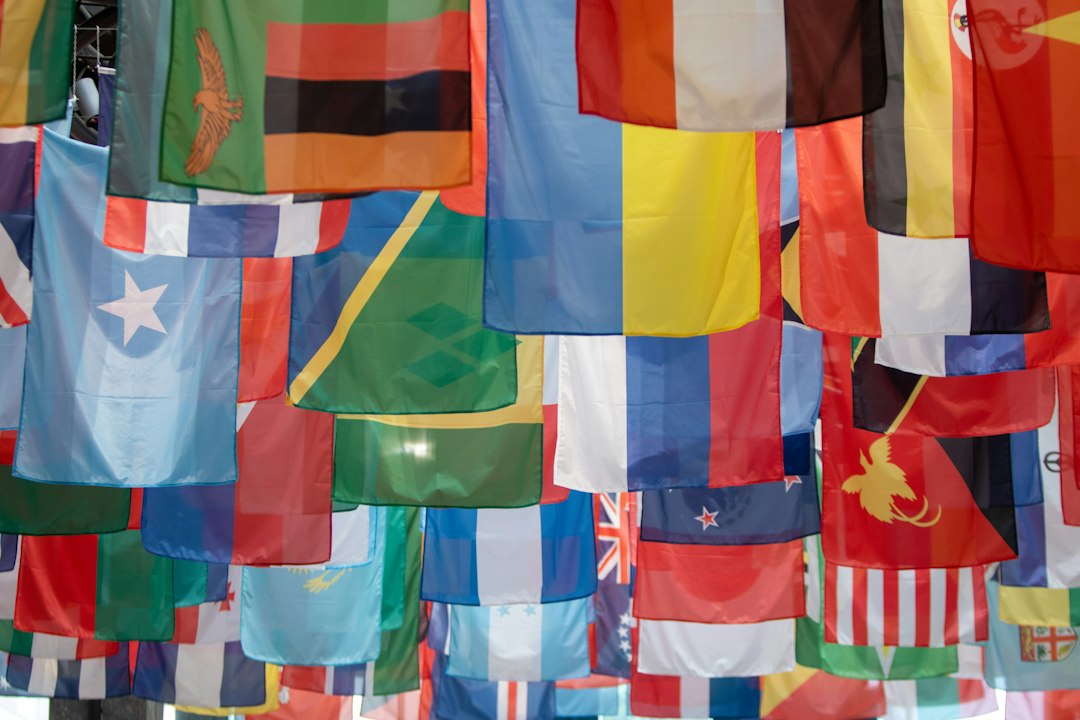
This month's multilateral agenda was dominated by acute political tensions during the 81st session of the United Nations General Assembly, marked by the mass boycott of the Israeli Prime Minister's address, US visa restrictions and solemn security warnings. Faced with gridlock in traditional institutions, the dynamics of influence shifted toward bilateral and restricted formats. The United States and China struck an unexpected trade and technology deal, while the G7 orchestrated a large-scale release of oil reserves in response to pressures on the energy market.
On the international security front, the Security Council's paralysis in the face of the conflicts in the Middle East and Ukraine was compounded by a major alert on the collapse of the nuclear non-proliferation treaties. In parallel, new regional coalitions are taking shape, notably in East Africa to address the escalating conflicts in the Horn of Africa, illustrating the ongoing fragmentation of global governance.
Unprecedented divisions and boycotts at the United Nations General Assembly
The 81st session of the General Assembly of the United Nations (UN) laid bare an extreme political polarization within the multilateral system. The most polarizing moment of the session came during the address by Israeli Prime Minister Benjamin Netanyahu on 25 September 2026. Dozens of delegations, totalling 77 countries, walked out of the chamber or declined to take their seats in protest against the military operations conducted in Gaza and Lebanon, leaving the speaker to address a nearly empty hall (Al Jazeera English, 25/09; Premium Times Nigeria, 26/09). From the podium, the Israeli leader forcefully rejected the accusations of genocide and branded the dissenting diplomats "moral cowards" and called the Turkish president a tyrant (Premium Times Nigeria, 25/09). This confrontation was compounded by an open crisis with the media, with the Al Jazeera network firmly denouncing the accusations levelled by the Israeli Prime Minister against its journalists on the ground (Al Jazeera English, 25/09).
The tensions linked to the Israeli-Palestinian conflict also affected the organization's administrative dimensions. For the second consecutive year, the United States refused to grant a visa to the president of the Palestinian Authority (PA), Mahmoud Abbas, preventing him from travelling in person to New York (Al Jazeera English, 17/09). In response, the General Assembly voted overwhelmingly in favour of a resolution authorizing the Palestinian president to address it by video link (Premium Times Nigeria, 26/09). On the sidelines of the Assembly, UN Secretary-General António Guterres conducted emergency negotiations on 24 September 2026 to mobilize funding for the United Nations Relief and Works Agency for Palestine Refugees in the Near East (UNRWA), which currently faces a critical shortfall of $100 million amid the access restrictions imposed by Israel (ONU Info, 24/09).
Verbal escalation and existential threats to global security
The interventions of the major powers at the UN podium took on a tone of rare aggressiveness. On 22 September 2026, US President Donald Trump delivered a speech marked by direct warnings to Tehran, asserting that he was prepared to "annihilate" Iran if its leaders did not negotiate a new comprehensive agreement (Washington Post, 22/09; Politico EU, 22/09). This bellicose rhetoric coincided with the statements of his Secretary of State, Marco Rubio, who seized the margins of the General Assembly on 24 September 2026 to warn against a risk of the "Balkanization" of Iraq, while demanding that the Iraqi government immediately disarm the pro-Iranian militias (Al Jazeera English, 24/09).
These regional tensions unfold against a backdrop of collapsing collective-security architectures. Secretary-General António Guterres issued a solemn warning before the General Assembly on 29 September 2026, stating that the global nuclear risk had reached its highest level since the Cold War (ONU Info, 29/09). This alert follows the expiry of the New START treaty and the inability of the states parties to reach a consensus at the Review Conference of the Treaty on the Non-Proliferation of Nuclear Weapons (NPT) (ONU Info, 29/09). At the same time, the Ukrainian diplomatic team was seeking to secure greater support in New York even as the Russian Federation launched a day-long bombardment of Kyiv on 23 September 2026, killing at least two people and wounding 24, and conducted attacks on 24 September, illustrating the chronic disconnect between multilateral debates and military realities on the ground (Politico EU, 23/09; Al Jazeera English, 24/09).
Bilateral compromises and energy unilateralism outside the UN framework
Faced with the paralysis of universal bodies, the world's powers are retreating toward narrower formats and transactional bilateral deals. At the conclusion of a three-day bilateral summit on 27 September 2026, the United States and China reached a partial de-escalation agreement (Korea Herald, 27/09). The world's two leading economic powers agreed on a reduction of customs tariffs on $30 billion of goods, the opening of a structured dialogue channel on artificial intelligence — under the heading of "superintelligence" — and mutual support for hosting the upcoming summits of the Asia-Pacific Economic Cooperation (APEC) and the Group of Twenty (G20) (Korea Herald, 27/09).
In parallel, the management of market crises is being organized directly within the Group of Seven (G7). Under the direct impetus of the US administration and with a view to the midterm elections in the United States, the G7 leaders approved on 2 October 2026 the coordinated release of 100 million barrels of petroleum products over a four-month period (Politico EU, 02/10; L'Express, 02/10). This stabilization measure, devised in coordination with the International Energy Agency (IEA), is specifically aimed at lowering diesel prices on Western markets (L'Express, 02/10).
Finally, the G20 energy ministerial meeting in Houston on 14 September 2026 highlighted the US environmental disengagement. The United States Environmental Protection Agency (EPA) there formalized the repeal of the 2024 greenhouse-gas emissions standards for power plants, confirming the Trump administration's pivot toward fossil fuels, to the detriment of global climate commitments (Politico EU, 14/09).
Reconfigurations and instabilities within the regional blocs
In the Horn of Africa, the escalation of regional tensions prompted the leaders of Egypt, Eritrea, Somalia and Sudan to convene an emergency summit in New Alamein City (Al Jazeera English, 05/10). On 5 October 2026, these four countries issued a joint statement calling for a peaceful resolution of the civil war in Sudan and of the border disputes with Ethiopia, giving concrete form to a new axis of coordination against Addis Ababa's regional ambitions (Al Jazeera English, 05/10).
This quest for local alliances comes as several key emerging countries face internal vulnerabilities: * South Africa: The executive was temporarily paralysed on 16 September 2026 following the announcement of the simultaneous medical incapacity of President Cyril Ramaphosa — put on rest after his return from the BRICS Summit in India — and his Deputy President Paul Mashatile (Mail & Guardian, 16/09). * South Sudan: The country faces heightened pressure from Washington, which threatened the government in Juba with targeted sanctions on 20 September 2026 if its handling of the humanitarian crisis, affecting nearly 10 million people, did not improve (France 24, 23/09). * Nigeria: On the financial front, the main opposition party, the Allied Peoples Movement (APM), formally requested on 29 September 2026 that the World Bank and other international lenders suspend the granting of new loans worth $1.5 billion in order to curb the country's unsustainable debt (Premium Times Nigeria, 29/09).
To watch
- Implementation of the G7 oil deal: The rollout of the release of 100 million barrels of refined products will run from October 2026 to January 2027, under the supervision of the International Energy Agency (IEA) (L'Express, 02/10).
- Launch of the Sino-American AI dialogue: The first bilateral working sessions on "superintelligence" negotiated at the September summit are due to begin in the coming weeks (Korea Herald, 27/09).
- Monitoring the UNRWA crisis: The evolution of the UN agency's $100 million shortfall and the impact of the Israeli restrictions on its operations in Gaza will be examined at the upcoming committee sessions at the UN (ONU Info, 24/09).
- Legal battle over US climate standards: The legal challenges announced by environmental organizations against the decision of the United States Environmental Protection Agency (EPA) to repeal the carbon limits for thermal power plants (Politico EU, 14/09).
Photo: Matthew TenBruggencate / Unsplash
Get the Global Events & Summits briefing by email
Monthly intelligence on global events & summits, curated with AI and reviewed by senior analysts. Available in English, French and Italian.
Subscribe for free