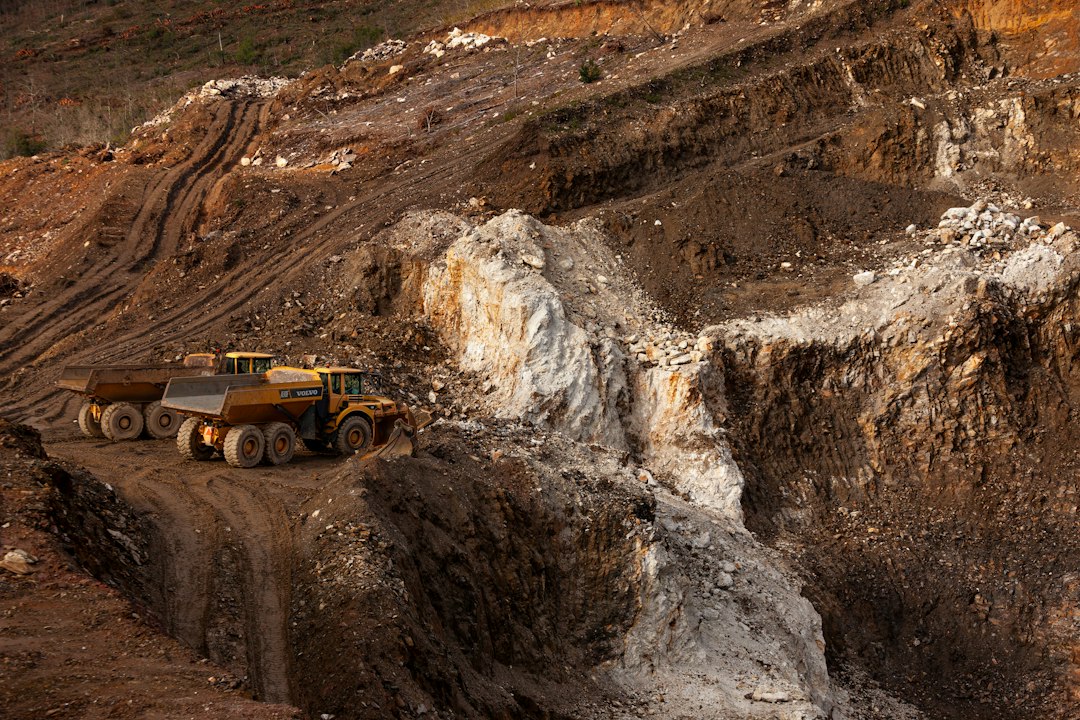
Wherever a state attempts to lock down access to strategic minerals, it encounters two limits that decrees cannot cross: the ground, with its accidents, its deaths and its collapsing shafts, and political contestation, which rises against extraction agreements at the very moment they are signed. The past month shows that mineral sovereignty is now decided less in the drafting of texts than in their capacity to hold up against operational reality and local acceptability.
This tension matters now because it strikes consumer powers and producer countries simultaneously. The European Union finds its flagship regulation falling behind schedule at the same time that the American agreements signed in Africa are fuelling head-on opposition and African artisanal extraction is turning into a humanitarian tragedy. Sector leaders can no longer read a regulatory decision without gauging its robustness against the test of the ground and of the populations concerned.
Sovereignty Decrees Hit a Wall of Execution
The European case is the most explicit. As of 8 October 2026, barely a quarter of the projects designated as strategic under the Critical Raw Materials Act are meeting their timelines. The causes, flagged by industrial players and NGOs alike, are not a matter of law but of its application: administrative delays, entrenched local opposition, insufficient financing. An ambitious text does not mechanically produce tonnes of refined metal, and the gap between the 2030 target and the actual trajectory is widening.
Lacking swift domestic results, Brussels is turning outward and towards alliances. Chile's contribution to the OceanEye Alliance, welcomed by Ursula von der Leyen on 23 September, comes with prospects for clean energy and critical raw materials under the aegis of Global Gateway. But the securitisation logic is compounded by a competitive hardening that complicates access to resources: the statement of objections issued on 17 September concerning MMG's proposed acquisition of Anglo American's nickel operations reflects the fear of excessive concentration in a strategic metal. Sovereignty and openness thus come into friction. At the national level, the same ambitions are expressed in COFORGIA BR's filing of the Brivadois Permit on 18 May 2026, targeting antimony, tungsten, copper, lithium, cobalt and rare earths over 320.46 km² in Cantal and Haute-Loire. An exploration permit, however, is only an intention, and the path from application to production remains precisely the one that proves most congested.
Extraction Agreements Spark Contestation the Moment They Are Signed
The second wall is political, and it rises where producer states welcome foreign investment presented as strategic. In the Democratic Republic of the Congo, KoBold Metals' deployment of artificial-intelligence tools for lithium exploration coincides with a hostile political realignment: former president Kabila has formalised the creation of the Front pour la Refondation de la Nation (reported on 12 October), which openly criticises the recent mining agreements between Kinshasa and Washington. The act of signing, far from closing the matter, opens it up to domestic contestation.
Nigeria offers a parallel pattern. The mining investment framework agreement signed with Washington on 23 September immediately ran into opposition from civil society, with the Health of Mother Earth Foundation warning on 1 October against a reproduction of the oil curse in the mining sector. In both cases, foreign investment guarantees neither stability nor buy-in; it becomes a matter of national politics. It is in this context that the major consumer powers are attempting to organise their supplies. Faced with Chinese dominance over the rare-earth value chain, which weighs asymmetrically on bilateral relations, Japan and Australia established on 5 October an economic-security dialogue framework centred on the reciprocal securing of their mineral chains. But these diplomatic architectures ultimately depend on the capacity of producer countries to extract under accepted conditions.
The Human Cost and Productive Fragility Are a Reminder of What Commitments Are Worth
Herein lies the point that multilateral forums and bilateral agreements cannot bypass: extraction kills, and its physical fragility undoes even the best-advertised trajectories. In Sudan, the collapse of an artisanal gold mine in West Kordofan on 15 September killed at least 70 people for want of rescue equipment. In South Africa, Minister Gwede Mantashe lamented on 9 October 52 accidental deaths in the country's mines in 2026, against a backdrop of criminal violence linked to illegal extraction, which peaked with 27 deaths in late September in the townships of Johannesburg and Cape Town. In Nigeria, the death in custody of 37 artisanal miners led to the suspension of a regional commander, three days of mourning and the shutdown of illegal mining activity around the M.I. Wushishi site, while shaft collapses multiplied in Plateau and Taraba states (Premium Times Nigeria, 18/09, 23/09).
This human fragility is matched by a productive fragility. In Chile, the world's leading producer, copper output fell in August to its lowest level in more than fifteen years, paralysed by winter storms (Bloomberg, 30/09, 01/10). The promised volumes remain at the mercy of climate and energy: Zambia's goal of exceeding one million tonnes of copper, the driver of an expected 6% growth in 2027, depends on the coordinated management of the Kariba basin, shared with Zimbabwe and threatened by falling water levels. It is precisely to narrow these gaps that governance reforms are being rolled out. A review of multinationals' alignment with ILO standards reveals highly uneven application depending on the host country. In South Africa, the warming of relations between the Department of Mineral Resources and Petroleum and the Minerals Council SA aims to modernise the mining cadastre by February 2028. These undertakings will be judged by their capacity to turn regulatory intention into sustainable practice.
In Brief
- The maritime logistics authorisation of Société Le Nickel in New Caledonia has been extended by ministerial order until 3 March 2027.
- In Brazil, members of parliament from Minas Gerais initiated on 23 September a draft resolution to suspend a decree favouring Cedro Mineração Mariana to the detriment of its competitors.
- The International Seabed Authority approved a budget of $30.7 million for 2027-2028 and consolidated the negotiations on the future Mining Code.
- A case study on ASEAN value chains was published in connection with the Intergovernmental Forum on Mining (community source, IGF, 12/10).
To Watch
- 3 March 2027: expiry of the extension of Société Le Nickel's maritime logistics authorisation in New Caledonia.
- July 2027: 32nd session of the International Seabed Authority in Kingston for the adoption of the deep-sea Mining Code.
Key Takeaways
- The Critical Raw Materials Act is running a major delay, with only a quarter of strategic projects meeting their timelines in the face of execution obstacles.
- American mining agreements in the DRC and Nigeria trigger immediate political and societal contestation upon signature.
- Extraction kills and remains physically fragile, with numerous mining deaths and climatically vulnerable production undoing stated commitments.
Photo: MiningWatch Portugal / Unsplash
Get the Mining & Critical Materials briefing by email
Monthly intelligence on mining & critical materials, curated with AI and reviewed by senior analysts. Available in English, French and Italian.
Subscribe for free