This month, global trade policy has been defined by a sweeping new US tariff offensive launched by the Trump administration. This wave of duties immediately triggered tensions, prompting Brazil to announce the activation of its Reciprocity Law as a countermeasure. The prospect of further US tariffs is also weighing on global commodity markets, notably that for copper.
In parallel, technological competition and the pursuit of economic security are accelerating. China, through its 15th Five-Year Plan, is reinforcing its strategy of technological autonomy, illustrated by the decision of the startup DeepSeek to produce its own chips. In response, Japan has adopted a new strategy to develop its dual-use technologies. For its part, the European Union is actively deploying its new instruments: the Foreign Subsidies Regulation is being used to investigate the e-commerce giant Temu. A 21st sanctions package has been adopted against Russia, but European unity is being tested by Greece's opposition on maritime shipping and by Germany's authorization of a nuclear project involving Rosatom.
The US Administration Launches a New Global Tariff Offensive
The period was dominated by a protectionist escalation led by Washington. On 23 July, the Trump administration, through its US Trade Representative (USTR) Jamieson Greer, implemented a new wave of global tariffs (MarketWatch, 23/07). This decision, in keeping with an aggressive trade policy, has affected dozens of countries (Africa News, 24/07) and includes, notably, 50% duties on certain Canadian products (Al Jazeera English, 21/07). Financial markets are on alert, scrutinizing potential White House announcements on tariffs targeting strategic commodities such as copper (Bloomberg Markets, 22/07).
The reaction of US trading partners was not long in coming. Brazil announced on 17 July that it would "immediately" invoke its Reciprocity Law in response to the 25% duties on its exports announced by Washington on 15 July. Adopted in April 2025, this law allows Brazil to deploy proportionate economic countermeasures, including against unilateral environmental measures deemed protectionist (Agência Brasil, 17/07). The Brazilian government also announced a support plan for the affected sectors (Agência Brasil, 17/07). At the same time, Washington continues to press the European Union to dismantle its own import rules, a year after an agreement aimed at easing trade tensions inherited from the previous administration (Financial Times, 18/07).
Economic Security at the Heart of National Strategies
Faced with the Sino-American confrontation, the major powers are refining their strategies for resilience and technological sovereignty. China confirmed and accelerated its industrial strategy with its 15th Five-Year Plan (2026–2030), adopted in March 2026. This plan prioritizes disruptive technological innovation and vertical control of value chains, intensifying pressure on the other economic blocs (Jacques Delors Institute, 13/07). This ambition is translating into concrete action: faced with US export controls, the Chinese AI startup DeepSeek announced its intention to manufacture its own chips, a project that has been in development for a year (arstechnica.com, 07/07). Apple's expressed interest in the Chinese memory-chip producer CXMT further underscores the increasingly central role of these state-owned enterprises in the global AI supply chain (Financial Times, 08/07).
In response, other major players are strengthening their capabilities. On 10 July, the Japanese government adopted an integrated innovation strategy for dual-use technologies, aimed at intensifying collaboration between the state, academia and industry. Dedicated research bases are expected to be established by 2030 (Adnkronos — Economie italienne, 10/07). Japanese experts also called on the government on 5 August to equip itself with a legal framework against economic coercion, inspired by the EU's Anti-Coercion Instrument (ACI), amid a revision of its security doctrine vis-à-vis China (Adnkronos — Economie italienne, 05/08). In the United States, voices are rising to stress that the effectiveness of semiconductor export controls depends on strengthened plurilateral cooperation, the current approach being deemed insufficient to slow China, which could dominate the market for legacy chips by 2027 (justsecurity.org, 09/07). For its part, India reaffirmed on 31 July that its exports of dual-use goods were in full compliance with its international obligations (Deccan Chronicle, 31/07).
The European Union Deploys Its Arsenal, Between Firmness and Internal Divisions
The European Union has demonstrated a willingness to use its new trade-defence instruments, not without revealing cracks in its unity. On 31 July, the European Commission sent a statement of objections to Temu, via its Irish subsidiary WhaleCo, for alleged obstruction during an inspection conducted under the Foreign Subsidies Regulation (FSR). This instrument is seen as having a notable deterrent effect on Chinese companies, as illustrated by the withdrawal of the Chinese train manufacturer CRRC from a tender (Politico EU, 30/07). However, its application is raising fears of a possible "chilling effect" on foreign investment in key sectors (EU Law Live, 31/07; Politico EU, 30/07).
On the sanctions front, the Council adopted on 24 July a 21st package of measures against Russia, targeting the energy, financial services and cryptocurrency sectors (EU Law Live, 24/07). Nevertheless, European unanimity remains fragile. On 15 July, Greece opposed new sanctions in order to protect the Greek shipping company Dynagas, which specializes in transporting Russian Arctic LNG (FT Markets, 15/07). Moreover, Germany exposed a loophole in the sanctions regime by authorizing, on 22 July, the participation of the Russian state-owned company Rosatom in a nuclear-fuel production project at Lingen, the Russian civil nuclear sector not being targeted by European sanctions (France 24 — Europe, 22/07). Furthermore, the impact of other European tools is being felt: an Indian official warned on 23 July that the EU's Carbon Border Adjustment Mechanism (CBAM) would make access to the European market more difficult for carbon-intensive Indian steel (Deccan Chronicle, 23/07).
Reshaping of Agreements and Market Access
Beyond the major geopolitical tensions, several bilateral and regional developments are reconfiguring trade flows. The India–United Kingdom free trade agreement entered into force on 15 July. It aims to reduce duties on thousands of products and to improve access to services and professional markets (Al Jazeera English, 15/07). Likewise, Ukraine and Turkey took an important step in their cooperation with a free trade agreement covering sectors ranging from grain to drones (Atlantic Council, 27/07).
Other countries are unilaterally adjusting their trade policy. India has authorized foreign direct investment (FDI) in the inventory-based e-commerce model, a measure intended to boost its exports by easing previous restrictions (Deccan Chronicle, 23/07). In Nigeria, the customs service announced on 7 July a reduction in duties on imported vehicles, from 20% to 10% for new ones and from 15% to 5% for used ones (Premium Times Nigeria, 07/07). Finally, in a decision with political significance, the Netherlands announced on 21 July a ban on imports from Israeli settlements, effective 22 September 2026 (Le Monde — International, 21/07).
To Watch
- 22 September 2026: Entry into force of the Netherlands' ban on imports of products from Israeli settlements.
- 2027: The point at which China could, according to US analysts, overtake Taiwan as the world's leading producer of legacy chips, marking a turning point in the technological competition.
- 22 January 2027: Conference at Radboud University on reconciling economic security with competitive markets, signalling an intensification of the academic and policy debate on this strategic subject.
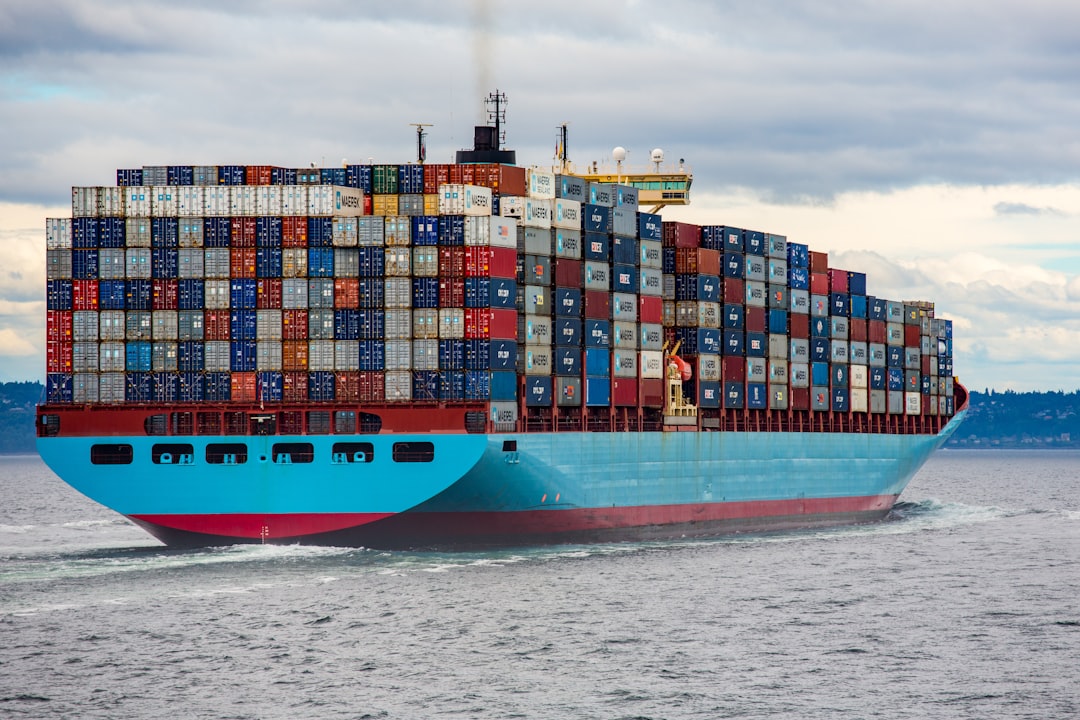
Photo: Ian Taylor / Unsplash
Get the Trade & Investment briefing by email
Monthly intelligence on trade & investment, curated with AI and reviewed by senior analysts. Available in English, French and Italian.
Subscribe for free