In the absence of common rules on industrial overcapacity, the major economies now settle their trade disputes through retaliatory trade-defence investigations. The cost of this confrontation falls on third countries, which are being pressed to choose which market to align their rules with. The starting point is a failure: meeting in Milwaukee in early October 2026, G20 trade ministers failed to reach agreement on industrial overcapacity or on eliminating forced labour from supply chains. Jamieson Greer, the US Trade Representative, himself identified these two sticking points. They are precisely the two issues that would have made it possible to define a standard of fair competition acceptable to all.
The stakes are immediate, because this vacuum has not stayed empty. Within a month, Beijing and Brussels have stepped up proceedings, imposed definitive duties and opened new investigations, and British industry is discovering that it cannot remain equidistant from the two indefinitely. The November calendar and the expiry of the US–China truce in January turn this sequence into a test: either the negotiating forums regain control, or unilateral instruments become the default mode of regulating trade.
Without a Shared Definition of Overcapacity, Every Investigation Becomes a Response
The mechanism follows directly from the multilateral deadlock. In form, an anti-dumping investigation is a technical procedure: it concerns a product, an origin and a dumping margin. But when the major economies cannot agree on what constitutes overcapacity, the national procedure becomes the only venue in which that question is settled, and each jurisdiction settles it according to its own criteria. Trade defence then ceases to be a targeted correction of market distortions. It becomes a vehicle for asserting relative power.
The October sequence illustrates this. In early October 2026, China's Ministry of Commerce opened an anti-dumping investigation into EU imports of p-nitrotoluene, an intermediate chemical. The timing matters more than the product targeted. The decision came a few days before a scheduled visit to Beijing by EU Trade Commissioner Maros Sefcovic, and is widely read as a direct retaliation against three similar investigations opened by the European Commission the previous week. A legal procedure thus serves as a diplomatic signal, sent just before the two sides sit down at the table.
This logic has a cumulative effect. Each new investigation calls for a proportionate response, chosen to be visible without being decisive. The volumes at stake for a chemical intermediate remain limited, but the sequence establishes a tit-for-tat rhythm that crowds out substantive discussion. For exposed companies, the risk no longer lies solely in the competitiveness of their prices. It depends on the political climate between their home country and their destination market.
The EU Arsenal Extends Beyond the Standoff with Beijing
The European Commission did not slow down after China's retaliation. In October 2026, it published an implementing regulation imposing a definitive anti-dumping duty on certain prepared or preserved citrus fruits from China. Here, an investigation carried through to completion results in a lasting barrier rather than a mere procedural threat.
The next decision is more significant still. In late October 2026, the Commission opened an anti-dumping investigation into imports of polyvinylidene fluoride (PVDF) originating in China, India and Japan. The scope therefore extends beyond the EU–China relationship. By targeting three origins simultaneously, Brussels is showing that its trade-defence instrument operates on a product and value-chain basis, and that it can reach foreign partners with no involvement in the cycle of retaliation opened with Beijing. This briefing has found no documented reaction from New Delhi or Tokyo. The established fact is sufficient: the absence of a common rule does not merely produce a duel between two major economies; it extends the use of unilateral instruments to every supplier in a sector.
The interests at play thus come into sharper focus. China uses targeted, carefully timed investigations to shape its counterparts' agenda. The European Union is pursuing definitive duties and new proceedings in parallel, making trade defence a pillar of its external economic policy. Neither is giving up its tools while waiting for a consensus that the G20 has failed to deliver.
The United Kingdom: The First Third Country Pressed to Choose Its Market
It is the intermediate players that bear most of the cost. The British automotive industry offers the clearest example. According to The Guardian (04/10), it faces a difficult trade-off between the EU market and the Chinese market. The constraint is explicit: the European Union is threatening to impose protectionist barriers if London does not apply tariffs to Chinese electric vehicles.
The mechanism described above takes on a wider significance here. A large market's trade defence is no longer confined to protecting its own producers. It seeks to extend to neighbouring partners, which would otherwise become routes for circumvention. The third country can no longer remain neutral: aligning its tariffs with Brussels exposes it to Chinese retaliation, while refusing to do so exposes it to EU barriers. UK trade policy is therefore partly being decided outside the country, under the combined pressure of two jurisdictions, neither of which leaves it the option of equidistance.
For business leaders, the lesson extends beyond the automotive sector and the British case. Any company whose value chain depends on both the European and the Chinese markets must consider the possibility that the regulatory alignment of its host country becomes a bargaining chip between powers. The United Kingdom is leading the way; others may follow.
In Brief
- On 9 October 2026, Donald Trump announced a deal with Russia covering deliveries of Russian diesel, with an initial volume of more than 300,000 tonnes, aimed at bringing down prices ahead of the midterm elections and implemented through a temporary OFAC general licence; in mid-October, he then suspended by executive order the enforcement of the new sanctions and restrictions under the Graham Act.
- The US sanctions imposed on 9 October 2026 on the International Criminal Court as an institution give most companies 180 days to wind down all transactions with it, prompting "deep concern" in Tokyo.
- Taiwan's semiconductor industry has experienced its first-ever strike: Micron Technology employees began a 24-hour walkout in Taoyuan, demanding a Samsung-style profit-sharing scheme.
- MI5 has warned universities and research centres about the risk of technology leakage linked to the China General Technology Research Institute.
What to Watch
- 13 November 2026: Finance and Trade Day at COP31 in Antalya, which will address the interplay between climate-related trade measures (including the Carbon Border Adjustment Mechanism) and the Parties' commitments.
- 18–19 November 2026: APEC Economic Leaders' Meeting in Shenzhen, under the Chinese chairmanship, focused on supply-chain resilience in the Asia-Pacific.
- 20 November 2026: EU–UK summit in Brussels, a milestone in the reset of post-Brexit trade relations (Consilium).
- 30 November 2026: meeting of EU trade ministers in Brussels on ongoing agreements, relations with the United States and China, and WTO reform (Consilium).
- 10 January 2027: expiry of the US–China trade truce under the Busan Agreement, with a risk of automatic increases in reciprocal tariffs if it is not extended.
Key Takeaways
- With no G20 agreement on overcapacity and forced labour, Beijing and Brussels are settling their disputes through tit-for-tat anti-dumping investigations.
- The EU is also targeting India and Japan over PVDF: the absence of a common rule extends unilateral instruments to every supplier in a sector.
- Third countries, led by the United Kingdom, are being pressed to choose between the European and Chinese markets, and their regulatory alignment is becoming a bargaining chip between powers.
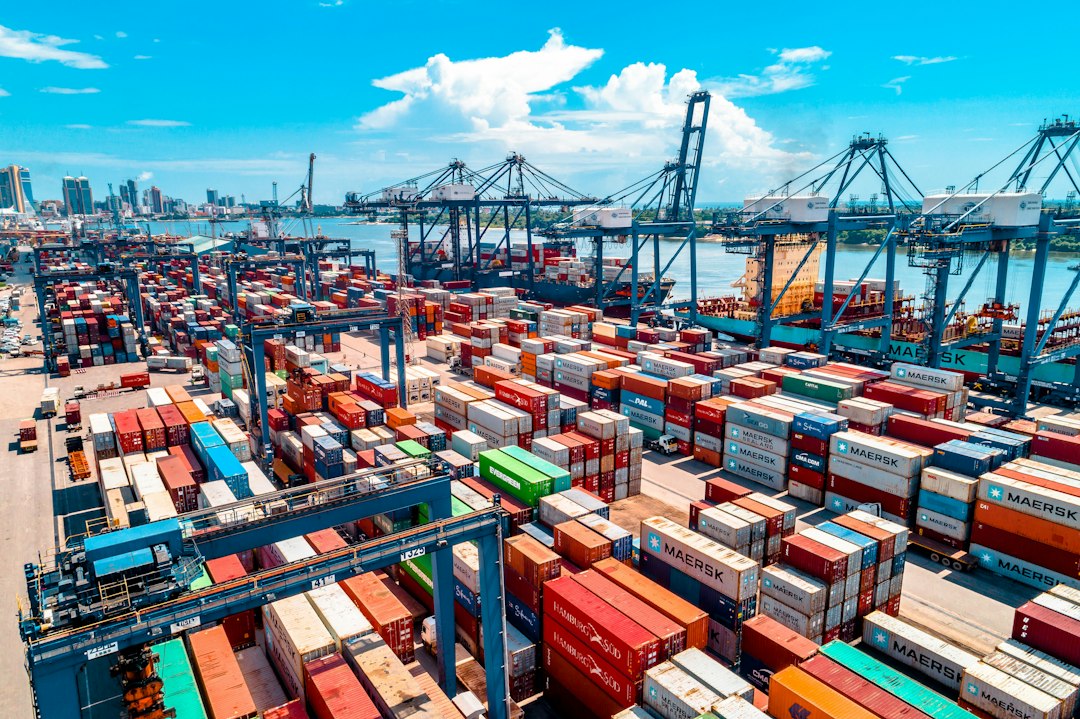
Photo: Ali Mkumbwa / Unsplash
Get the Trade & Investment briefing by email
Monthly intelligence on trade & investment, reviewed by senior analysts. Available in English, French and Italian.
Subscribe for free