The major straits of commercial shipping are no longer mere transit points whose risk can be managed: they have become targets. As a result, the security of sea lanes is no longer the backdrop to global transport regulation; it is becoming its precondition. The International Maritime Organization is about to adopt the rules that will govern the world fleet's operations for decades, even as its own Secretary-General deems one of the world's busiest passages unsafe for navigation.
The timing makes this contradiction immediate. From 2 to 6 November 2026, the 138th session of the IMO Council, meeting in London, put the protection of major shipping routes, freedom of navigation and the safety of seafarers exposed to international tensions at the top of its agenda. A few weeks later, the same organization is due to conclude the technical and then the political stages of its net-zero framework. For a shipowner, shipper or insurer, these two agendas do not follow one another: they overlap.
From the Black Sea to Hormuz, Merchant Vessels Are Now Targeted in Their Own Right
In the Black Sea, the nature of the threat has changed. The region is now described as the most dangerous shipping route in the world for civilian crews. On 5 October 2026, a Turkish vessel carrying Ukrainian grain was struck and sank off Romania, and the following day two commercial vessels were hit within Bulgaria's exclusive economic zone. Russian attacks are specifically targeting Ukraine's grain corridors. This is therefore no longer a case of shipping suffering collateral damage from a conflict: the commercial flow itself is the objective, and it is being hit even in the waters of third countries.
The Strait of Hormuz reflects the same logic, with a variety of methods that complicates any countermeasure. A strike that triggered a fire sank a cargo ship, according to the Maritime and Port Authority of Singapore; a supertanker carrying 2 million barrels of crude caught fire after hitting a naval mine on 17 October 2026; and a rare attack using explosives attached by fighters operating from a speedboat damaged a tanker's engine. Strikes, mines, explosives planted from a speedboat: within a few weeks, three distinct modes of attack have targeted the same passage, rendering futile any response built around a single category of threat.
The Gulf littoral has not been spared on land either. In Saudi Arabia, Houthi rebels have stepped up missile and drone strikes: Riyadh's King Khalid International Airport was hit three times in October, including one attack that killed at least 12 people and injured more than 300, while King Fahd International Airport in Dammam was also targeted, leaving one dead and eight injured. Another attack hit Saudi Arabia's strategic East-West pipeline and Saudi Aramco facilities. Insecurity is no longer confined to the sea: it now extends to the region's land, airport and energy hubs.
The IMO States the Principle, Governments Foot the Bill
In the face of these attacks, the multilateral forum has little more than words at its disposal. On 1 November 2026, IMO Secretary-General Arsenio Dominguez formally declared that the Strait of Hormuz remained dangerous for commercial shipping. Coming from the body responsible for freedom of navigation, this assessment carries particular weight: it acknowledges that the principle alone is no longer enough to guarantee passage, and it came just days before the Council session devoted to route protection.
Governments, for their part, are counting the cost and acting within their own remit. According to the European Commission, the temporary closure of and disruptions in the Strait of Hormuz have already cost the European economy €127 billion. This figure shows that a passage thousands of kilometres away weighs directly on an import-dependent economy. In the Black Sea, Commission President Ursula von der Leyen is planning a visit to Bulgaria and Romania, two littoral states whose waters or approaches were the scene of the October attacks. On the US side, the State Department has ordered the departure of non-essential diplomatic staff from the Kingdom, a sign that Washington considers the threat to Saudi infrastructure serious enough to scale back its presence.
These responses share a common feature: they are national or regional, defensive, and focused on protecting people and immediate partners. None of them, on its own, restores traffic on the affected routes. The gap between the principle articulated in London and the reality on the water remains as wide as ever.
The Net-Zero Framework Will Be Negotiated on Routes Declared Dangerous
It is against this backdrop that the IMO enters the most demanding phase of its climate agenda. In late November in London, the Intersessional Working Group on Reduction of GHG Emissions from Ships is due to carry out the technical preparation of the decarbonization dossier ahead of MEPC 85; the Marine Environment Protection Committee, at its 85th session, is then expected to aim for adoption of the IMO Net-Zero Framework. The decarbonization rules will therefore be debated not in a stable environment but in a quarter in which the organization itself has had to devote its Council to seafarer safety.
For operators, the consequences are tangible: the climate obligations emerging from these meetings will apply to a fleet part of which sails through passages where ships are being sunk, and whose potential diversions drive up operating costs. The credibility of a global framework presupposes that the global fleet can actually sail; yet neither the Black Sea nor Hormuz currently meets that condition. The year-end decisions will therefore need to be read on two levels: as a climate milestone, and as a test of the IMO's ability to advance its standard-setting mandate when its security mandate is being thwarted on the ground.
In Brief
- A collision on 28 October 2026 at Urda, south of Madrid, between a Renfe AVE and an Iryo train killed at least 68 people and injured around 100; the investigation points to the LZB signalling system on the Madrid–Andalusia line and an instruction issued by the control centre. This second disaster of the year on the Spanish network led to the resignation of Spain's Transport Minister on 4 November 2026.
- More than 70 hoax bomb threats targeted 20 European airports in early November, forcing 35 flights to make emergency landings or be evacuated and prompting the Commission to convene a security meeting with Member States and third countries on 11 November 2026.
- In Montreal, ICAO is holding the Council phase of its 239th session (2–13 November 2026), ahead of CORSIA's transition to its mandatory phase, followed by the Seventh Worldwide Air Transport Conference (16–20 November 2026) and an extraordinary session of the Assembly (19–20 November 2026) expected to enlarge the Council from 36 to 40 members.
- UNECE's WP.29 is holding its 200th session in Geneva (17–20 November 2026) to vote on new regulations covering automated vehicles, safety and zero-emission technologies.
What to Watch
- 23–27 November 2026: IMO Intersessional Working Group on Reduction of GHG Emissions from Ships (ISWG-GHG), London, responsible for the technical preparation of the decarbonization dossier ahead of MEPC 85.
- 30 November–3 December 2026: 85th session of the IMO Marine Environment Protection Committee (MEPC 85), which aims to adopt the IMO Net-Zero Framework for shipping.
Key Takeaways
- The IMO aims to adopt its Net-Zero Framework at MEPC 85 in late November 2026, even as its Secretary-General deems Hormuz dangerous for shipping.
- In the Black Sea as in Hormuz, merchant vessels are now targets, with Hormuz facing strikes, mines and explosives planted from speedboats.
- Disruptions in Hormuz have already cost the European economy €127 billion, and national or regional defensive responses are not restoring traffic.
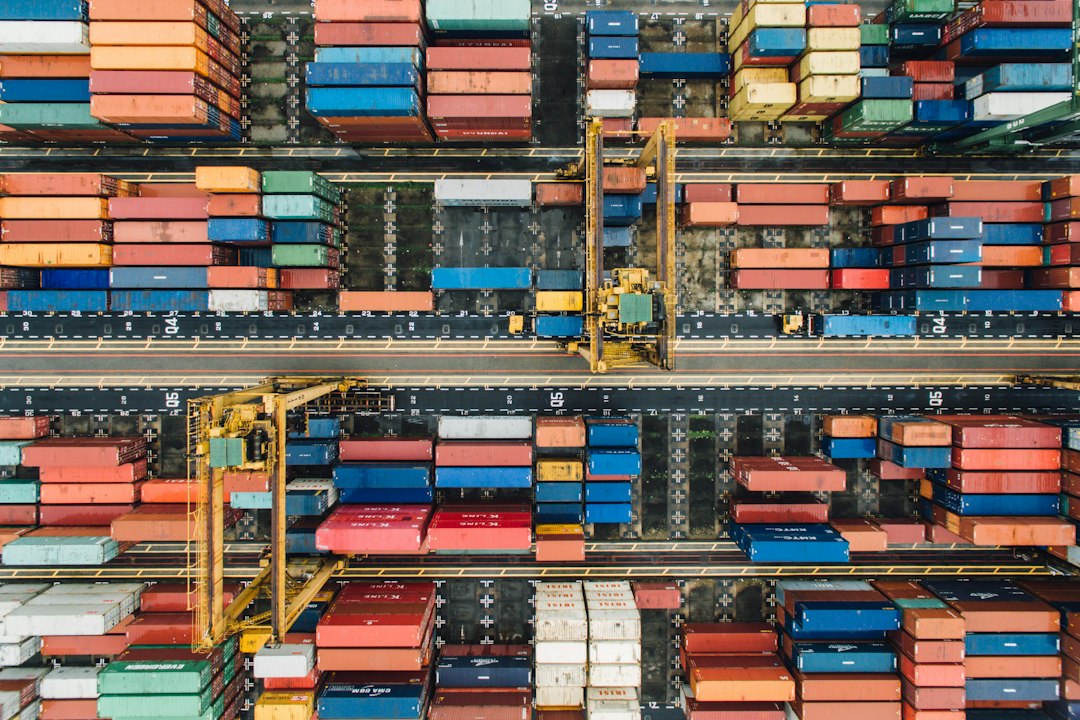
Photo: CHUTTERSNAP / Unsplash
Get the Transport & Mobility briefing by email
Monthly intelligence on transport & mobility, reviewed by senior analysts. Available in English, French and Italian.
Subscribe for free