The security of the world's major shipping routes deteriorated sharply this month under the combined effect of repeated attacks in the Strait of Hormuz and the advance of Houthi rebels along the Red Sea. This systemic vulnerability of energy and trade corridors poses an immediate risk to fuel supplies, prompting the G7 and the European Union to consider large-scale releases of strategic diesel stocks to counter rising prices.
In parallel, the resilience of transport infrastructure is being severely tested by coordinated railway sabotage in Europe, major air-traffic communication failures in the United States and significant production delays in the electric-vehicle battery sector. In response to these crises, multilateral regulatory frameworks are preparing for pivotal sessions to harmonize safety standards and accelerate decarbonization across the sector.
The multilateral framework confronting the imperatives of transition and harmonization
The international regulatory calendar is accelerating, with major deadlines for the technical governance of transport. Work at the UNECE promises to be intense in Geneva, with technical sessions scheduled for October 2026 devoted to emissions standards and the technical harmonization of vehicles, in preparation for a plenary session of WP.29 expected in November 2026.
In the maritime sector, attention is turning to the IMO, where the reduction of greenhouse gases (GHG) is expected to enter a decisive phase at a forthcoming session of the MEPC addressing the net-zero framework and the associated economic measures.
The European battery industry under acute industrial strain
Europe's electrification ecosystem is passing through a zone of heavy turbulence, illustrating the difficulties of ramping up in the face of global competition. Stellantis NV was thus compelled to announce the temporary suspension of operations at some of its plants in France, owing to a shortage of batteries for long-range electric vehicles and a desire to manage dealer inventories.
This supply fragility is compounded by the financial difficulties of local producers. A French battery manufacturer backed by Renault SA was forced to open discussions with its creditors to ease the terms of its debt, following persistent delays in its industrial production. These bottlenecks contrast with the IEA's analyses, which note that critical minerals account for only about a quarter of the cost of a battery cell and just 3% of the final price of an average electric vehicle.
Europe's rail and inland waterway networks facing climatic and human threats
The resilience of land transport infrastructure has become a matter of national security. In the Netherlands, a coordinated act of sabotage paralyzed the rail network after pipes and materials were placed on the tracks at 30 different locations, severely disrupting ProRail's IT system. Prime Minister Rob Jetten denounced "life-threatening" actions aimed at destabilizing society.
In Germany, Deutsche Bahn (DB) faces a colossal technical challenge. Federal Transport Minister Steffen Bilger must steer the urgent renovation of more than 40 heavily used sections, described by the sector as a "pre-infarction" situation. As the first milestone of this plan, the strategic Berlin-Hanover line was fully closed on 2 October 2026 for rehabilitation work scheduled to run until the end of 2027.
In France, the SNCF put the lost revenue at €80 million owing to climatic hazards and summer disruptions, prompting it to announce an investment plan of €300 million over the 2026-2030 period to adapt its rolling stock and strengthen its infrastructure. This climate of tension on the French network is heightened by local labor disputes, notably in Normandy, where railway workers exercised their right of withdrawal on 23 September following the derailment of a Rouen-Caen train.
Moreover, the waterways have not been spared: an abnormal drop in water levels on the Rhine briefly stranded a vehicle-carrier vessel at the port of Düsseldorf, a reminder of the vulnerability of inland shipping to climate change.
Geopolitical escalation along maritime and air corridors
International shipping is facing extreme geopolitical pressures. In the Red Sea, the Houthi rebels have consolidated their grip on the Yemeni coast, seizing control of the strategic Bab al-Mandeb strait. Qatar warned of the "catastrophic" consequences for world trade of a blockade of this strait, through which 12% of global trade transits. In the face of this threat, Italy has decided to deploy warships to protect its commercial vessels, while the European Union (EU) struggles to coordinate a common response.
The situation has also deteriorated in the Strait of Hormuz, where Iran is multiplying attacks on oil tankers and threatening to cut undersea data cables. Two tankers were struck there by unidentified projectiles on 3 October, followed by an attack on a tanker off Qatar's northern coast on 8 October. In the Black Sea, Russian drone attacks sank the cargo ship Alfa Watan and set the Able ablaze, prompting India to engage in security talks with Ukraine and Russia.
The aviation sector is also experiencing security and technical shocks. In the United States, a massive failure of the FAA's communication system caused temporary ground stops at five major airports in the Northeast, four of them in the New York area. In the Middle East, an attempted knife attack in the cockpit of a flydubai flight on 30 September led Saudi Arabia to open an air-safety investigation.
Finally, in France, the sector is vigorously protesting against the draft 2027 budget: the Union des aéroports français (UAF) said it was "stunned" by the tax increases under consideration, a government announcement that wiped more than €2 billion off the value of airport and motorway infrastructure operators.
Forums, rules and balances of power
The energy crisis triggered by instability in the maritime straits has prompted a political standoff between the United States and the European Union. Faced with the surge in US diesel, which reached a record price of $6.53 a gallon, President Donald Trump raised the threat of a fuel export ban to relieve the domestic market.
This prospect of a US embargo alarmed the European Commission (EC). Under pressure from Washington, the G7 countries reached an emergency agreement to release 100 million barrels of oil and diesel. Within this framework, the European Union agreed to mobilize 50 million barrels from its own strategic reserves, resulting in an immediate easing of world diesel prices.
In parallel, the security of grain and energy transport in the Black Sea is the focus of intense bilateral diplomatic activity. India, particularly exposed given its supplies and the safety of its crews, has positioned itself as a direct mediator with Ukraine and Russia to secure a safe shipping corridor in the face of mounting Russian drone strikes.
To watch
- October 2026: WP.29 (UNECE) technical sessions in Geneva on emissions standards and vehicle harmonization.
- November 2026: WP.29 (UNECE) plenary session in Geneva.
- End of 2026: MEPC (IMO) session on the maritime Net-Zero regulatory framework.
Key takeaways
- The UNECE and IMO multilateral frameworks will hold decisive sessions at the end of 2026 on emissions standards, vehicle harmonization and maritime decarbonization.
- Attacks in the Red Sea and the Strait of Hormuz threaten 12% of global trade, prompting the G7 and the EU to release their strategic reserves.
- The European battery industry is faltering, with the suspension of Stellantis plants and the financial difficulties of a French manufacturer backed by Renault.
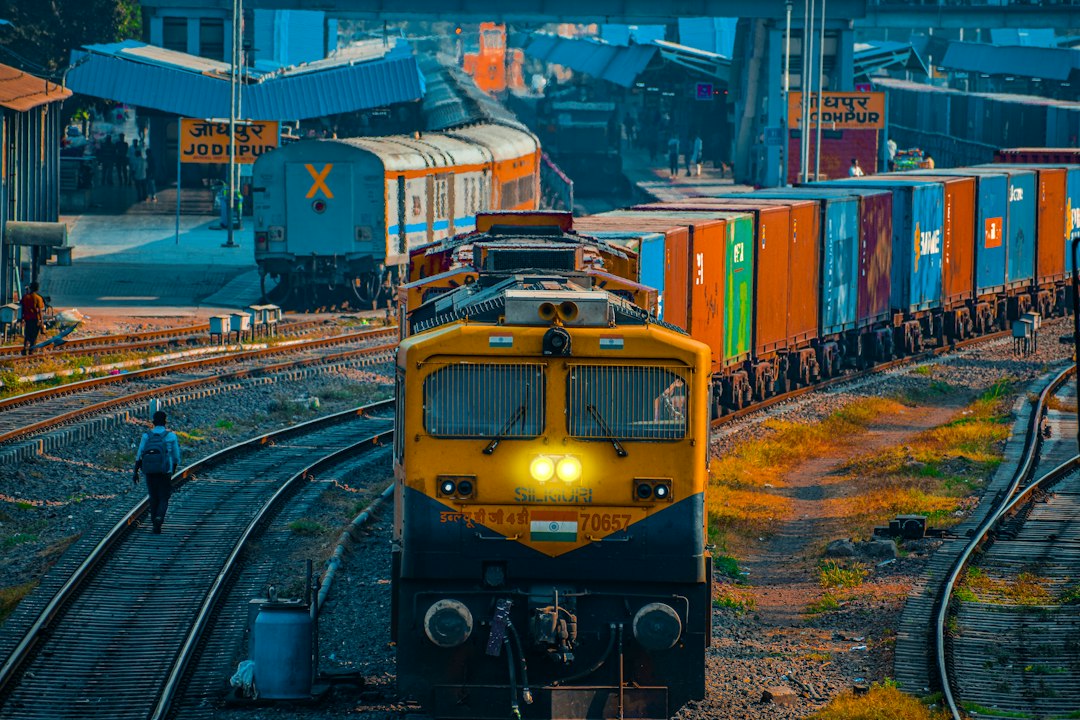
Photo: Anirudh / Unsplash
Get the Transport & Mobility briefing by email
Monthly intelligence on transport & mobility, curated with AI and reviewed by senior analysts. Available in English, French and Italian.
Subscribe for free